Major repairs, defect rectification and staged replacements scoped, delivered and documented by one contractor. On one site or across a portfolio, including buildings we have never serviced.
Safe QLD takes on one-off major repairs and rectification work on its own merit, from defect reports we did not write. The scope goes to one contractor and comes back tested, documented and back in service.
AS 1851-2012 AS 2118 Sprinklers AS 2419 Hydrants AS 1670.1 Detection AS/NZS 2293.2 Emergency Lighting QBCC Licence 1143420 Cm3 Prequalified
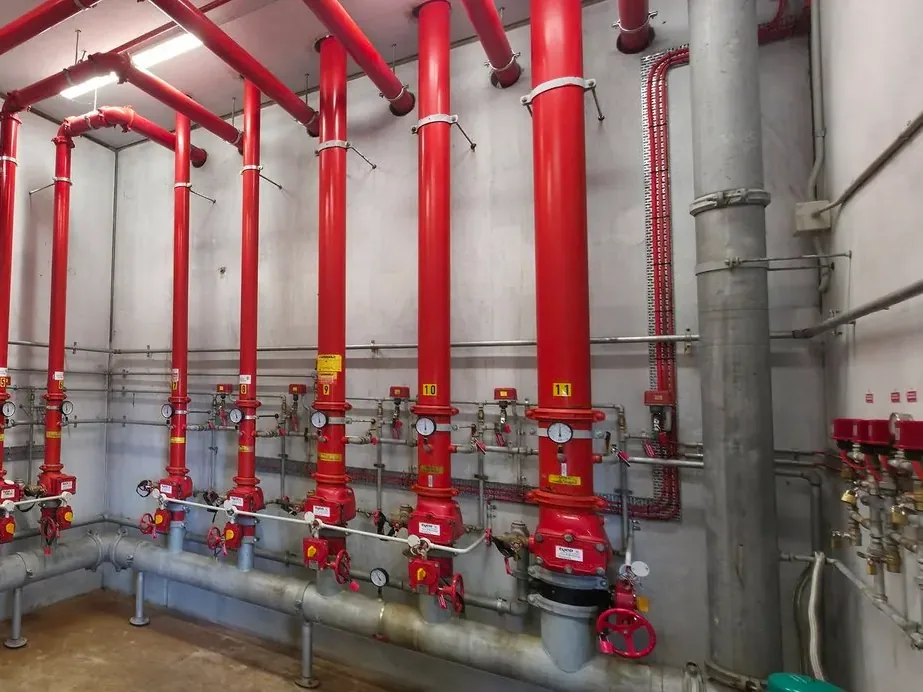
Pumped and un-pumped sprinkler systems, alarm valve sets, pipework, heads, hydrants and hose reels repaired, re-tested and returned to full service.
Electric and diesel pumpsets, pump controllers, auto-start and changeover, suction and discharge pipework, batteries, chargers and monitoring signals diagnosed and rectified.
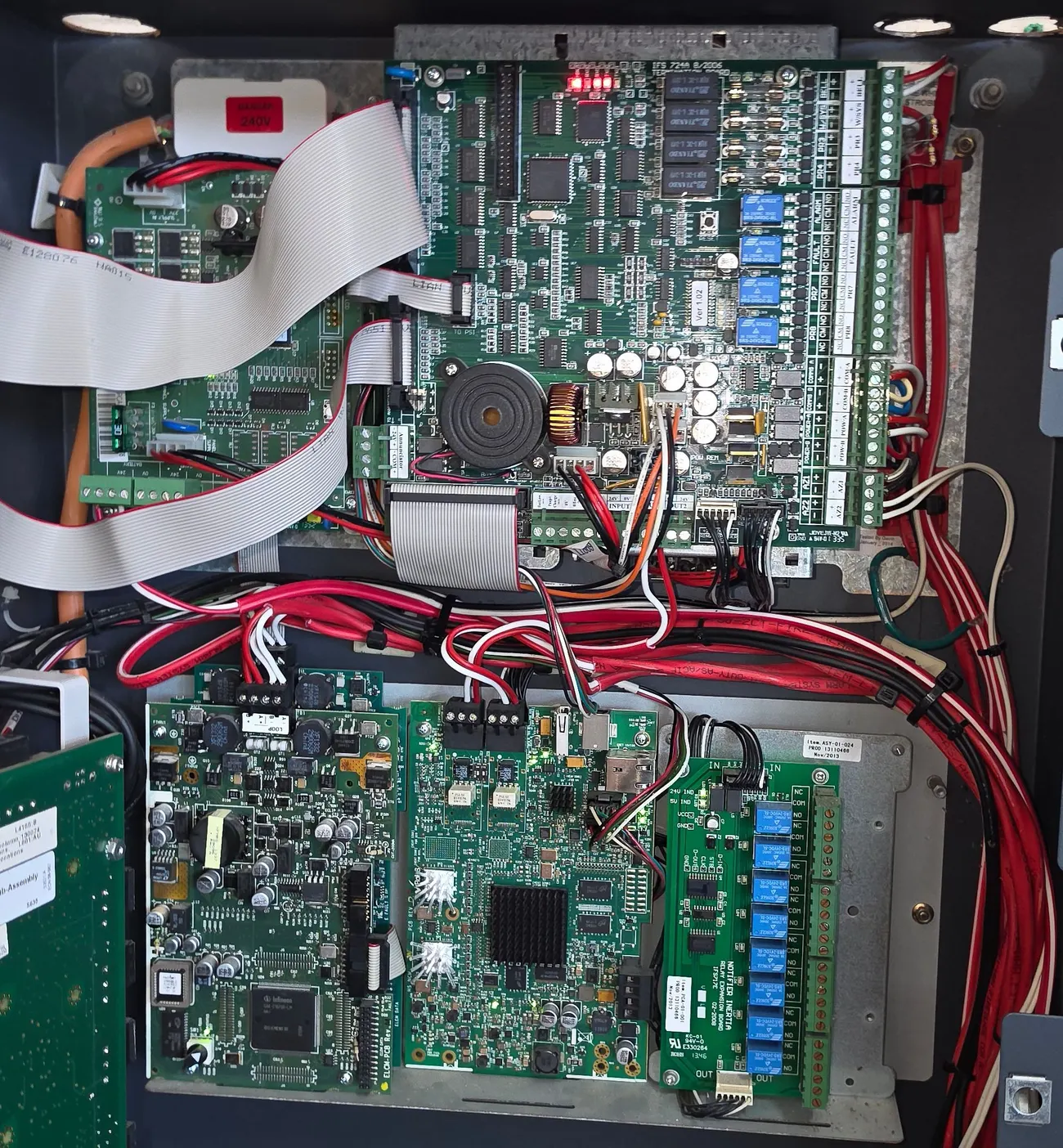
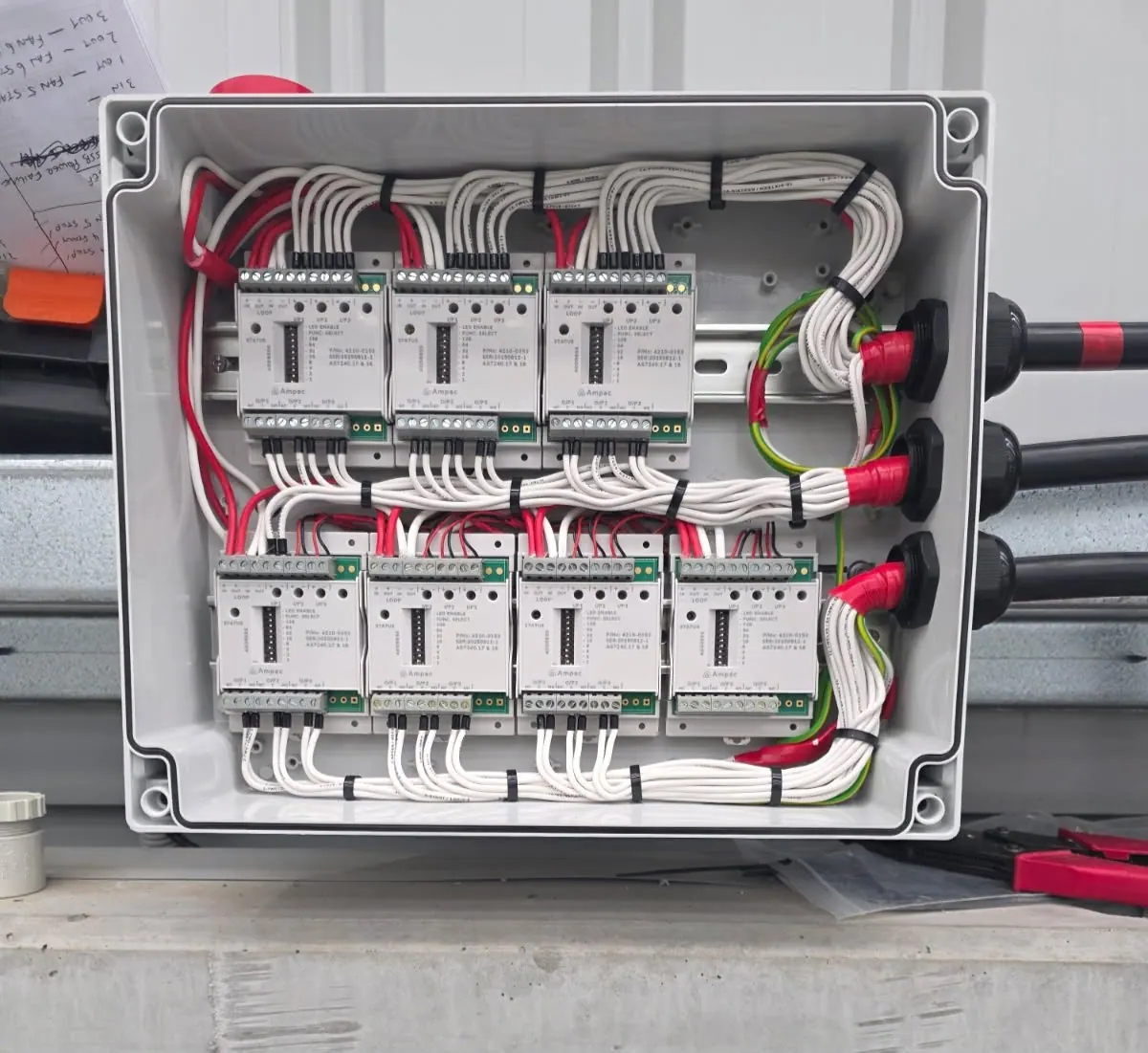
Fire indicator panels, addressable and conventional detection, ASD and VESDA aspirating systems, Ampac, Pertronic and Notifier panels and EWIS occupant warning repaired and reprogrammed.
Fire water tanks, booster assemblies, ring mains and hydrant valves that fail flow, pressure or internal inspection, repaired, re-tested to AS 2419 and documented.
Safe QLD Pty Ltd, trading as Safe QLD Fire Protection. QBCC licence 1143420 (fire protection) and electrical contractor licence 1506841, FPA Australia member, WorkCover Queensland, and a WHS management system of 180+ controlled documents independently assessed under Cm3. Certificates of currency, SWMS, our WHS management plan and sample service reports are supplied on request for tenders, supplier panels and head contractor onboarding portals. Tenders and prequalification.
Open any panel for the full scope, method and schedules.
Most fire protection companies will only touch a building they already maintain. That leaves asset owners holding a defect report they cannot action, on a system nobody will take responsibility for. Safe QLD takes on one-off major repairs and rectification work on its own merit, on buildings we have never serviced, from defect reports we did not write.
With over 60 years of combined experience and a complete in-house team of industry experts and technicians, we design, install, commission and maintain fire protection assets right across South East Queensland. That capability is what makes a genuine repair service possible. We are not limited to the faults that can be closed out with a spare part from the van, because the same business also drafts, project manages, installs, programs and commissions entire systems.
Whether it is a single failed component, a pump room that needs rebuilding or a full panel replacement, the scope goes to one contractor and comes back tested, documented and back in service. If you want us to keep it that way afterwards, we can pick the building up onto an AS 1851 maintenance agreement. If you do not, the repair still stands on its own.

The routine service industry is built around inspection. A technician attends, tests, finds a problem and writes it up. Then the report lands with the building owner, the body corporate manager or the facility manager, and the search begins for somebody who can actually carry out the repair. Weeks pass. The system stays impaired. The defect rolls onto the next report, and the one after that.
Safe QLD exists on the other side of that line. We hold six in house disciplines under one roof, which means a defect goes straight into a scope rather than into a referral:
The practical result is simple. You are not managing three contractors and a certifier through a rectification. You are managing us.

Nobody goes looking for a fire repair contractor on a good day. These are the reports we take, and any one of them is a reason to send us the report today.
Send us what you have. A service report, a photo of the panel, a scanned defect list, or just a description of what the building is doing. Email Service@SafeQLD.com.au.

There is a point where rectification stops being a repair and becomes a capital works item. An unsupported fire indicator panel that fails every quarter. A pumpset that no longer makes its duty point no matter what is rebuilt. A sprinkler system that was designed for a use the building no longer has. Patching those is money spent to stand still.
Because Safe QLD carries design, drafting, project management, installation, programming and commissioning in house, a rectification can scale straight up into a project without changing contractors midway:
Recent examples include fire indicator panel replacements, with network cabling and reprogramming, at Seqwater water treatment plant and dam sites, and the fire system upgrade during the Westside BMW refurbishment.
Options are priced before anything is ordered, works are staged around your operating hours, and commissioning data is handed over as the new baseline for future testing. See Engineering, Design & Installation for how we deliver major projects.
Fire systems fail in fairly predictable ways. This is the diagnostic thinking our technicians bring to site, set out plainly so you know what you are dealing with before we arrive. Every case still gets tested and proven rather than assumed, because the obvious cause is not always the real one.
| Symptom | What it usually means | What we do |
|---|---|---|
| Fire pump will not start on demand | Flat or failing battery bank, stale fuel, a drifted or blocked pressure sensing line, a controller left in manual after somebody's site visit, or a failed start relay or contactor | Prove the start signal at the controller, test batteries, chargers and start attempts under load, check fuel and sensing lines, then repair or replace the failed item and re-run the auto-start sequence until it is repeatable |
| Pump starts but will not hold pressure, or short cycles | Wear in the pump, a leaking non-return or relief valve, a partly closed or restricted suction, a failing jockey pump, or a system leak somewhere downstream | Take flow and pressure readings across the curve against the design duty, watch suction under flow, isolate the leak or failing valve, repair or replace and re-verify the performance test result |
| Sprinkler system impaired, leaking or isolated | Corroded or damaged pipework, a failed head or fitting, a valve strapped shut and never reopened, or damage from building works or impact | Agree interim protection measures in writing, isolate and drain the affected zone, repair or replace pipework, heads and valves, then refill, air-test as required and return the system to full service with the valve set proved |
| Hydrant or booster fails its flow and pressure test | Partly closed or seized isolating valves, blockage or corrosion in the ring main, a failing pumped supply, or a water supply that no longer delivers what the original design assumed | Test at the most disadvantaged hydrant, walk the main and prove valve positions, clear or replace the restriction, then re-test to AS 2419 and document the result for your records and the Queensland Fire Department |
| Fire indicator panel sits in persistent fault | An open or shorted detection loop, a failed device or module, battery or charger failure, an earth fault from water ingress, or a monitoring line fault outside the panel | Fault find the loop back to the device, replace the failed component, prove the panel clean through a full reset and functional test, and re-prove signalling through to the monitoring service |
| Repeat unwanted alarms evacuating the building | Detectors in the wrong environment or overdue for cleaning, dust or steam ingress from a tenancy change, moisture in a duct detector, or programming that no longer matches how the building is used | Interrogate the panel event log to find the real source, clean, relocate or change detector type as appropriate, reprogram delays and cause and effect to suit current use, then monitor the result |
| Emergency or exit lighting fails its discharge test | End-of-life batteries, failed charging circuits or LED modules, fittings on a switched circuit rather than a permanent supply, or coverage that no longer matches the current tenancy layout | Replace failed batteries, drivers and fittings, correct supply and wiring faults, verify illumination levels and exit sign placement against AS/NZS 2293.1, then re-run the full-rated-duration discharge test to AS/NZS 2293.2 and log the result |
| Aspirating or VESDA system in fault or nuisance alarming | Blocked or damaged sampling pipework, a dirty filter or detector chamber, an airflow fault after building works, or sensitivity settings that no longer suit the environment | Clear and pressure test the sampling network, replace filters and failed detector components, re-establish airflow within tolerance, re-set sensitivity for the actual risk and re-commission with transport time verified |
| Panel or system is obsolete and parts are unavailable | The equipment is past end of life, the manufacturer no longer supports it, and each fault now takes longer and costs more to patch than the last one | Give you an honest comparison between continued patching and replacement, then scope a staged upgrade with design, drafting, installation, programming, commissioning and certification support handled in house |
A repair engagement with Safe QLD runs the same way whether it is one failed valve or a whole system replacement. You always know what is wrong, what it costs and what evidence you will hold at the end.
Email the service report, defect list, auditor's finding or notice. We read it against the standards it was written under and tell you what is urgent and what can be scheduled.
A technician attends, proves the fault rather than assuming it, and identifies the real cause. Critical impairments get a two hour response from the Gold Coast to the Sunshine Coast, 24/7.
An itemised quote against each defect, with photos, the standard clause it relates to and a clear recommendation. No vague allowances and no work starts without your approval.
Our own technicians carry out the work, with isolations managed and interim protection agreed in writing. Every repaired function is re-tested and proved, not just switched back on.
Test results, photos and records that close the defect out of your AS 1851 documentation, with certification evidence prepared and coordinated with your certifier where the work requires it.
Plenty of the buildings we now maintain came to us as a one-off repair. The owner had a problem, we fixed it properly, and holding the routine servicing with the same team simply made sense afterwards. That is an invitation, not a condition. The repair works either way.
AS 1851 routine servicing across every system in the building, on one schedule, one report and one contract, with defects quoted and rectified by the same technicians who found them. No more chasing a second contractor to action the first one's report.
See how maintenance contracts workEvery repair closes out with the test data, photographs and documentation you need for your AS 1851 records, your annual occupier's statement and your insurer, whether you ever engage us again or not.
Explore compliance & AS 1851Pumped and un-pumped sprinkler systems designed, installed, commissioned, tested and repaired to AS 2118 and AS 1851, from valve sets and pipework through to full system upgrades.
Explore fire sprinklersElectric and diesel pumpsets, controllers and auto-start, boosters, ring mains and fire water storage tanks, performance tested, rectified and replaced.
Explore pumps & water storageEvery fire system in the building on one AS 1851 schedule, one report and one contract, with defects quoted and fixed by the team that found them.
Explore maintenance contractsSend the drawings, the asset register or the last audit report. You get a written scope, a price and our prequalification pack from the people who will do the work. QBCC 1143420, Cm3 prequalified, $20M public liability and $10M professional indemnity.