24/7 ON CALL · 2 HR RESPONSE QBCC 1143420 · Cm3 Prequalified · FPA Australia Member Tenders & Prequalification Client Portal Service@SafeQLD.com.auEmail Us (07) 3286 6310
Home / Services / Emergency & Exit Lighting

Emergency & Exit Lighting to AS/NZS 2293, by In-House Electrical Contractors

QBCC licensed fire protection contractor (1143420), licensed electrical contractor (1506841), Cm3 prequalified. When the power fails, your exit lighting is what gets people out safely. With our own licensed electrical contractors, Safe QLD installs, tests and maintains emergency and exit lighting across buildings and portfolios in South East Queensland, designed to AS/NZS 2293.1 and maintained to AS/NZS 2293.2.

AS/NZS 2293.2 six-monthly discharge testing 90-minute battery verification Licensed electrical contractors 24/7 on call
Life Safety Lighting

Install, testing and maintenance, all under one roof

Emergency lighting is mandatory in commercial and public buildings under the National Construction Code and AS/NZS 2293.1, and it only counts if it works when the mains go down. Because Safe QLD's team includes specialist electrical contractors, we handle the complete scope in house, from new installations and LED upgrades to six-monthly discharge testing, repairs and compliance reporting.

We service single sites and multi-site portfolios across offices, warehouses, childcare centres, hospitals, aged care, self storage and strata buildings, with every test recorded in a detailed digital compliance report that keeps you audit-ready. Every fitting is individually identified and logged, which is what AS/NZS 2293.2 requires of the record, and full building LED upgrades are delivered by the same electrical team.

AS/NZS 2293.1 AS/NZS 2293.2 NCC QBCC Licence 1143420

Exit Signs

Illuminated exit signage installed, tested and maintained so evacuation routes are always clearly marked, day and night.

Emergency Luminaires

Battery-backed emergency lights that keep corridors, stairs and open areas illuminated for at least 90 minutes in a blackout.

Commercial Smoke & Heat Alarms

Commercial 240V smoke and heat alarms serviced on the AS 1851 Section 6 routine, on the same attendance as the detection system.

Electrical Works

Specialist electrical contractors on the same team, so wiring, switchboard and circuit work never needs a second trade.


AS/NZS 2293.2 Testing

Six-monthly discharge testing, explained

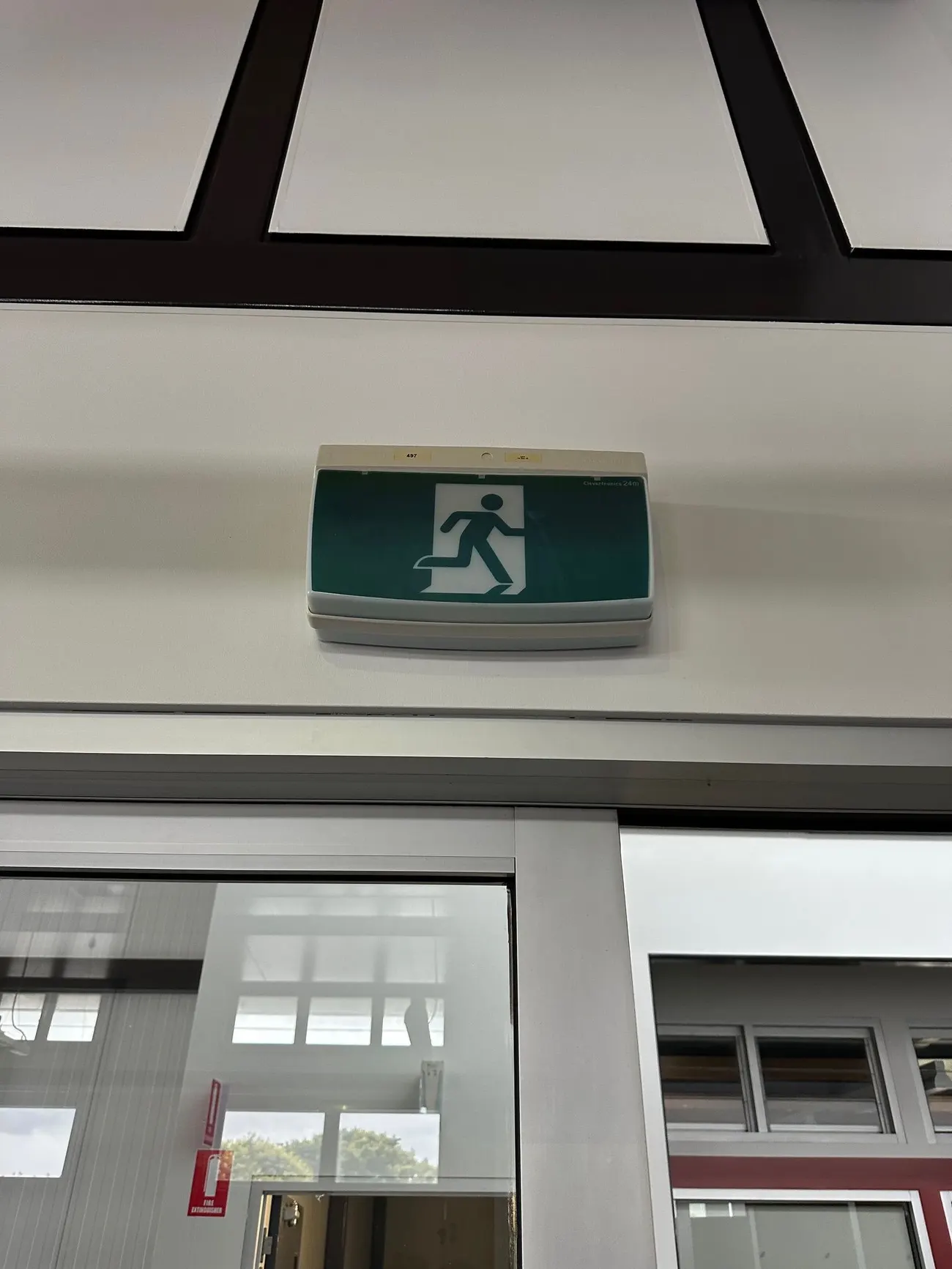
Illuminated exit sign mounted above a glazed doorway

The 90-minute test your building must pass

AS/NZS 2293.2 requires every emergency and exit light to undergo a discharge test every six months, plus an annual full system inspection. The purpose is simple: prove that each fitting will stay lit on battery power for the full evacuation period required by AS/NZS 2293.1.

  • Mains power isolated to the emergency lighting circuit via the test switch
  • Every fitting run on battery for the full 90 minutes required by AS/NZS 2293.1
  • Each luminaire and exit sign inspected for output, damage and correct operation
  • Failed batteries, tubes and fittings identified and quoted for repair or LED replacement
  • Power restored and recharge confirmed across the circuit
  • Results logged against every fitting in your digital compliance report (AS/NZS 2293.2)
Why 90 minutes? AS/NZS 2293.1 stipulates that emergency lighting must provide illumination for at least 90 minutes during a power outage. A fitting that glows for five minutes and dies is a compliance failure, and more importantly, a real risk during an evacuation. Only a genuine timed discharge test proves your batteries can go the distance.
The Electrical Edge

Specialist electrical contractors, not just testers

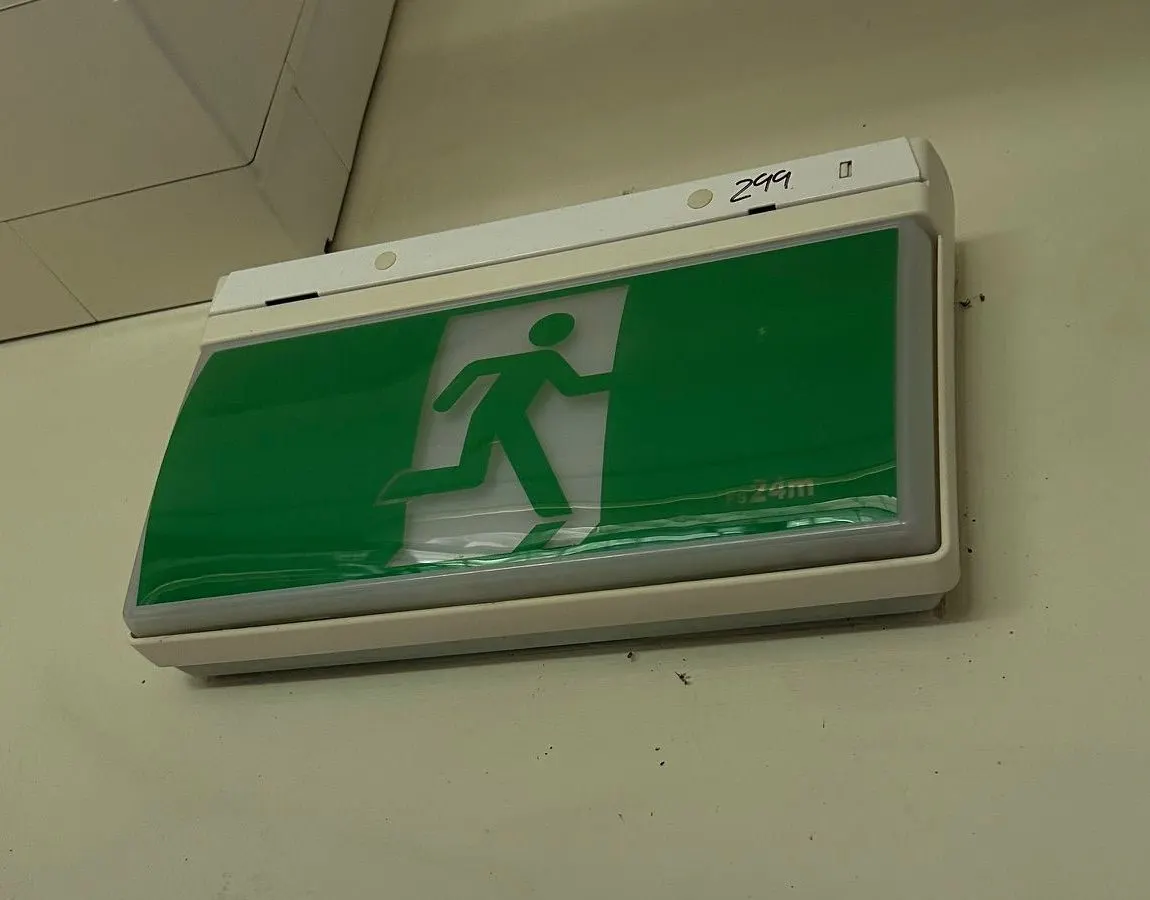
Green exit sign mounted on a wall above a doorway

Found a fault? We fix it in the same visit wherever possible

Many fire companies can test your emergency lighting but have to hand the repairs to someone else. With our team of specialist electrical contractors, Safe QLD handles your emergency lighting installation, testing and maintenance end to end, and carries out the electrical rectification work in the same visit wherever possible.

  • New emergency and exit lighting installations, design to certification
  • LED upgrades that meet AS/NZS 2293.1 performance requirements while cutting running costs
  • Battery, tube and complete fitting replacements
  • Circuit, switchboard and test-switch electrical works by licensed contractors
  • Commercial smoke and heat alarm installation, testing and interconnection
  • One provider, one report, no coordination headaches between trades

Fewer contractors on site means fewer call-backs, faster rectification and a single accountable team for your whole lighting compliance program.

How It Works

Your lighting compliance program, sorted

Site Assessment

We map every emergency and exit fitting, check coverage against AS/NZS 2293.1 and the NCC, and scope the program across the site or portfolio.

Install & Upgrade

Our electrical contractors install new fittings or upgrade tired fluorescents to compliant, efficient LEDs.

Six-Monthly Testing

Scheduled 90-minute discharge tests and annual inspections to AS/NZS 2293.2, booked automatically.

Report & Rectify

Digital compliance reports with every fitting logged, plus fast repairs for anything that fails.

Single site or one defect to price? Request a quote.

Common Questions

Emergency and exit lighting FAQs

What is the maintenance schedule for emergency lighting?
Emergency and exit lighting is one of the few systems not covered by AS 1851. Inspection and maintenance is to AS/NZS 2293.2, with AS/NZS 2293.1 covering design and installation. The routine that matters is a six-monthly discharge test, where fittings are run on battery for their full rated duration, 90 minutes for most systems, and every fitting that fails to hold up is recorded and rectified. There is a visual inspection routine between discharge tests as well. Safe QLD schedules it automatically and records every result against every fitting.
How long should emergency lighting operate during a power failure?
AS/NZS 2293.1 stipulates that emergency lighting must provide illumination for at least 90 minutes during a power outage. That is why our discharge test runs every fitting on battery for the full 90 minutes, and any unit that falls short is flagged for battery or fitting replacement.
Are emergency lights required in all buildings?
Not in every building. The National Construction Code sets where emergency lighting is required, which covers many commercial, public and multi-residential buildings, and AS/NZS 2293.1 sets how it is designed and installed. If you are unsure whether your building's coverage is adequate, we can assess it against AS/NZS 2293.1 and the NCC as part of a lighting compliance review across the site or portfolio.
What records are required for emergency lighting maintenance?
Because emergency lighting sits under AS/NZS 2293.2 rather than AS 1851, it keeps its own log. Every fitting must be individually identified and its results recorded, including which fittings failed the discharge test and what was done about them, and the log must be available for inspection. A report that says 'emergency lighting tested, all OK' on a building with 300 fittings is not a compliant record. Ours lists every fitting, its location and its result.
Can LED lights be used for emergency lighting?
Yes, provided they meet the performance requirements outlined in AS/NZS 2293.1 for emergency luminaires. LED fittings are our standard recommendation for upgrades, with longer life, lower energy use and more reliable battery performance than older fluorescent units.
Keep Exploring

Need the compliance position of a building or a portfolio in writing?

Baseline audit, gap report and an AS 1851 schedule you can table with the board, the auditor or the Queensland Fire Department.

Enquire Here