24/7 ON CALL QBCC Licence 1143420 · CM3 Prequalified Careers: Apply Here Client Portal Service@SafeQLD.com.auEmail Us (07) 3286 6310
Home / Services / Fire Doors & Passive Fire

Fire Doors & Passive Fire Protection Across Brisbane & SEQ

Passive fire protection is a crucial component of any fire system design. Safe QLD inspects and maintains fire doors, fire penetrations, dampers and fire-rated construction to AS 1851-2012, keeping the invisible half of your fire safety working when it matters most.

QBCC Licence 1143420 CM3 Prequalified 24/7 On Call Detailed Digital Compliance Reporting
Why Passive Matters

The Fire Protection You Never See Is the Protection That Buys Time

Alarms detect a fire and sprinklers fight it, but passive fire protection is what contains it. Fire-rated doors, walls, dampers and sealed penetrations divide your building into compartments that hold fire and smoke back, protecting exit paths and giving occupants and fire crews precious minutes. When a fire door is propped open or a cable penetration is left unsealed, that containment fails silently, and nobody knows until the worst possible moment.

That is why AS 1851 requires these systems to be inspected and maintained on a fixed routine, and it is work Safe QLD takes pride in doing properly. Every trade that touches your building, from data cablers to plumbers, can compromise passive fire without knowing it. Our routine inspections catch those breaches early and put them right.

AS 1851-2012 AS 1905.1 Fire Doors AS 1530.4 FRL Testing NCC/BCA QBCC Licence 1143420 QFD

Fire & Smoke Doors

Six-monthly inspections of door leaves, frames, closers, latches, seals and signage to AS 1851-2012, with adjustments and repairs to keep every door set closing and latching as rated.

Penetration Sealing

Inspection and fire stopping of service penetrations through fire-rated walls and floors, using tested sealing systems that maintain the element's FRL under AS 1530.4.

Fire & Smoke Dampers

Inspection and testing of fire and smoke dampers in ductwork crossing fire compartments, confirming they close and hold as designed.

Audit & Reporting

Detailed digital compliance reports itemising every door, damper and penetration inspected, with photos, defects and clear rectification quotes for audit-ready records.


Fire Door Inspections

Every Door Set Checked, Recorded and Kept Compliant

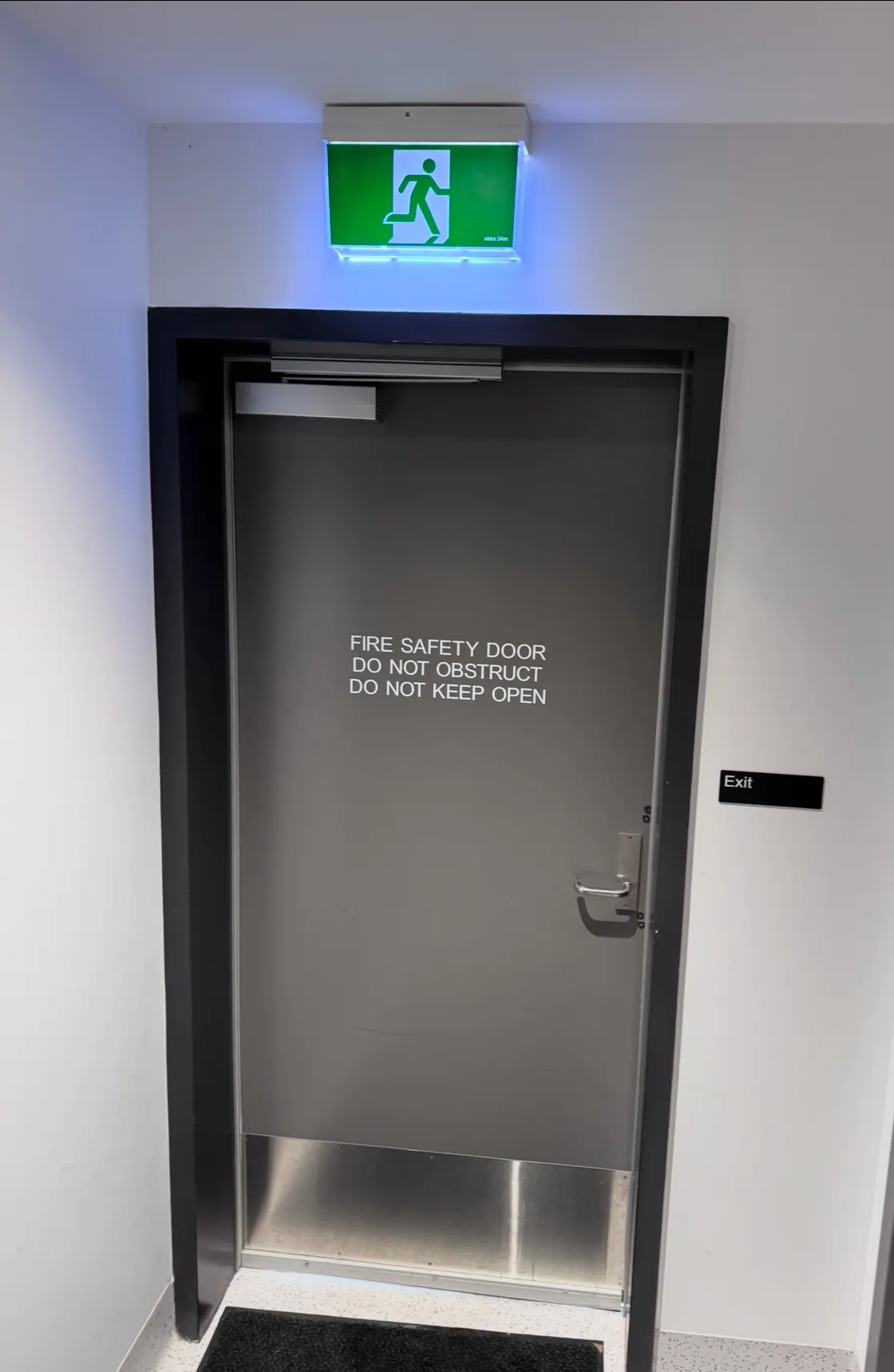
Grey fire safety door with DO NOT OBSTRUCT signage and exit sign, inspected by Safe QLD Fire Protection

Six-Monthly Fire Door Servicing to AS 1851-2012

A fire door only earns its rating when it can close and latch on its own, every time. AS 1851-2012 recommends six-monthly inspections on the majority of door sets, depending on the situation, and Safe QLD runs that schedule for buildings across South East Queensland.

  • Door leaf, frame and hardware inspection to AS 1851-2012 and AS 1905.1
  • Self-closing and latching operation checked on every door set
  • Intumescent and smoke seals inspected and replaced where degraded
  • Compliance tags, DO NOT OBSTRUCT and exit signage verified
  • Gaps, clearances and door furniture checked against tolerance
  • Obstructions, wedges and hold-open devices identified and reported

Every door is logged in your digital maintenance record with test dates, results, defects found and corrective actions, exactly the records your annual occupier statement depends on.

Fire door with do not obstruct signage and exit sign in a commercial building

Penetration Sealing and Fire Dampers Done Properly

Every cable tray, pipe and duct that passes through a fire-rated wall or floor is a potential hole in your building's compartmentation. A penetration is only compliant when it is sealed with a system tested to maintain the element's fire resistance level under AS 1530.4.

  • Site-wide penetration audits of fire-rated walls, floors and shafts
  • Fire stopping of new and legacy penetrations with tested sealing systems
  • Fire and smoke damper inspection and operational testing
  • Fire-resistant construction checks to NCC/BCA and the AS 1530 series
  • Rectification after fitouts and services upgrades by other trades

Because Safe QLD also services your alarms, sprinklers and extinguishers, passive fire slots straight into the same AS 1851 program, one visit schedule, one report, no gaps between contractors.

Our Process

From First Audit to Audit-Ready, in Four Steps

Baseline Survey

We walk your building and register every fire door, damper and penetration, photographing and locating each item so nothing is invisible again.

Scheduled Inspections

Six-monthly fire door routines and passive inspections are locked into your AS 1851-2012 program alongside your other fire systems.

Rectify Defects

Doors adjusted, seals replaced and penetrations fire stopped by our own technicians, with clear quotes before any chargeable work begins.

Digital Reporting

Every result lands in a detailed digital compliance report, giving you audit traceability for QBCC, the Queensland Fire Department and your annual occupier statement.

Found a fire door that will not close, or a wall opened up by another trade? Do not wait for your next scheduled service. Safe QLD is on call 24/7. Email Service@SafeQLD.com.au and we will make it compliant again fast.
Common Questions

Fire Door & Passive Fire FAQs

How often should fire doors be inspected?
Fire and smoke doors fall under Section 12 of AS 1851-2012, passive fire and smoke systems, and the frequency is not a single interval. It varies with the door type and the building, with some types including sliding fire doors carrying a three-monthly routine and others on six-monthly and yearly routines. We establish the correct frequency for each door set during the survey rather than applying a blanket interval, and record every door set in a digital compliance report.
Are fire doors required in all buildings?
Not in all buildings, but they are required wherever the National Construction Code calls for a fire-resistant opening. Common locations include fire-isolated stairs and passageways, plant and service rooms, apartment entry doors, and openings in fire-rated walls between compartments. Fire doorsets are manufactured and installed to AS 1905.1 and must carry a compliant tag. Where they are required, they must be maintained so they perform their rated function.
What is a fire compartment?
A part of a building enclosed by fire-resisting construction, floors, walls and the fire doors and dampers through them, designed to hold a fire inside it for a set period, as required by the National Construction Code. The catch is that a compartment is only as good as its weakest penetration. One unsealed cable tray, a damper that will not close or a fire door wedged open defeats the whole compartment, which is why passive fire is inspected as a system and not as a list of doors.
How is fire resistance level (FRL) determined?
FRL is assessed on structural adequacy, integrity and insulation, as per AS 1530.4, and indicates how long a building element can withstand fire exposure. Any service penetration through a fire-rated element must be sealed with a tested system that maintains that FRL, which is exactly what our fire stopping work delivers.
Keep Exploring

Is your building due for its AS 1851 fire service?

Fast response across South East Queensland. Clear digital reports. Audit-ready compliance.

Enquire Here