One of South East Queensland's premier fire protection and maintenance contractors. We do not just test alarms. Safe QLD designs, drafts, installs, programs, commissions, certifies and maintains complete fire detection and occupant warning systems, from a single addressable panel through to networked multi-building estates, aspirating detection in critical environments and full cause-and-effect integration with sprinklers, dampers, lifts and air handling.
Detection is the system every other fire system answers to. It decides when the occupants are warned, when the lifts come home, when the dampers close, when the air handling stops and when the brigade is called. Getting that right is an engineering exercise, not a testing round. With over 60 years of combined experience and a complete in-house team of industry experts and technicians, Safe QLD is able to design, install, commission and maintain your fire protection assets as required, and detection is where that depth shows most.
Because the same business holds the design, the drafting, the installation crew, the programming, the commissioning and the maintenance contract, there is nobody to point at when a cause-and-effect does not perform. The engineer who set the strategy and the technician who attends at 2am are working from the same documentation.
AS 1670.1 AS 1851-2012 Section 6 AS 1670.4 EWIS NCC/BCA QBCC Licence 1143420 CM3 Prequalified QFD
Detection strategy, detector selection and coverage, zoning, battery and power supply calculations, and cause-and-effect development to AS 1670.1, coordinated with your fire engineer, hydraulic consultant and certifier.
Shop drawings, block plans, zone diagrams, cable routes and equipment schedules produced in house, so approvals, procurement and site works are not waiting on a third party draftsman.
Programme, staging, ITPs, site inductions, safety documentation and progressive QA records, run to the reporting standards head contractors and government clients expect.
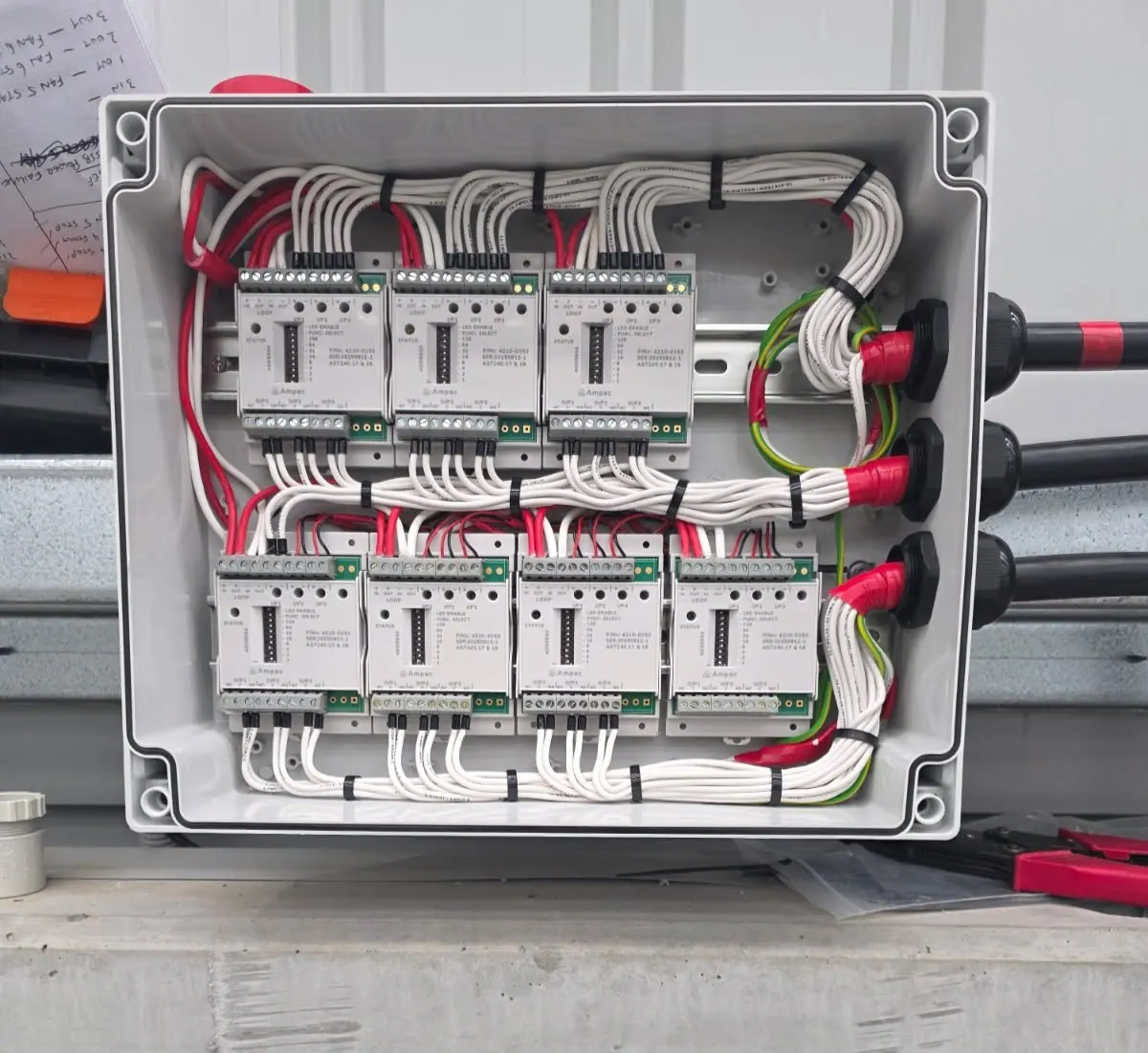
In house specialist electrical contractors installing field wiring, devices, panels and interfaces, then programming the panel logic, zone text, delays and outputs to match the approved matrix.
Device by device verification, every interface proven, evacuation sequences demonstrated to the certifier and the client, and a complete handover package with as-built documentation.
The system rolls straight into an AS 1851 Section 6 routine with defect management, spares, upgrade planning and 24/7 fault response across the whole portfolio.

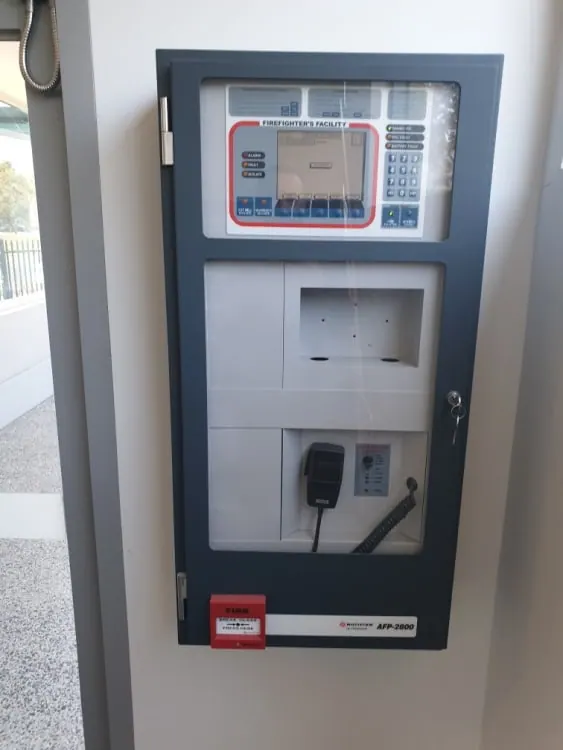
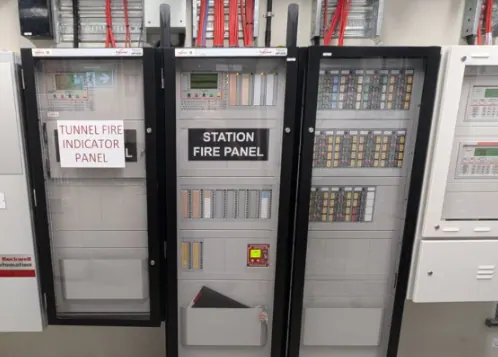
A detection system is only as good as the panel architecture behind it. We size and configure fire indicator panels for the building as it will be used, not just as it is drawn, allowing for future stages, tenancy churn, added floors and the fitouts that inevitably follow.
Our Project Manager, Jacob Thompson, brings over 20 years across fire design, special hazards, gaseous systems and project management, so complex panel and releasing arrangements are familiar ground rather than a first attempt.

The difference between a compliant system and a certificate is the cause-and-effect. We build the matrix with the design team, program it into the panel, then prove every line of it in front of whoever needs to see it.
Programming and commissioning are two of our six in house disciplines for a reason. When a system fails at commissioning on a major job it is almost never the hardware, it is the logic behind it.
Different environments need different detection. Cold storage, plant rooms, high ceilings, dusty industrial spaces, hospital wards and residential high rise each defeat the wrong detector for entirely different reasons, and specifying around that is the whole job.
Very early warning aspirating smoke detection for cold storage, data and comms rooms, high bay warehousing, switch rooms and healthcare, where smoke stratification or air movement makes point detection unreliable. Pipe network design, aspirating detection installation, sensitivity staging and ongoing filter and airflow servicing. We work with VESDA, Securitron and Wagner Systems equipment.
Built for critical environmentsEmergency warning and intercom systems and occupant warning systems for buildings where a single alert tone is not enough. Speaker circuit design and coverage, warden intercom points, staged and zoned evacuation strategy, speech intelligibility, amplifier and battery capacity, and evacuation sequence programming proven at commissioning.
Staged evacuation, done properlyPhotoelectric, multi-criteria and thermal detectors, beam detection over large volumes, duct detection in air handling, manual call points, sounders, strobes and door holders. Where a room contains an unacceptable risk we coordinate detection with gaseous and special hazard releasing arrangements.
Right detector, right placeOn a major building the detection system is the conductor. Every interface below is designed, wired, programmed and then physically proven by our technicians during commissioning, and re-proven at each annual routine.
Flow switches, pressure switches, valve monitoring, pump start and pump fault signals brought back to the panel and alarm signalling equipment, whether the system is pumped or un-pumped.
Fire and smoke damper control and position monitoring, smoke exhaust and stair pressurisation initiation, sequenced against the evacuation strategy rather than wired as an afterthought.
Lift homing and recall, magnetic door holders releasing, access controlled and secured doors failing safe on alarm, all coordinated with the lift contractor and security integrator.
AHU shutdown and start signals, duct detection, mechanical services board interfaces and BMS signalling, tested with the mechanical contractor so shutdowns actually happen on alarm.
Alarm signalling equipment interfaces, brigade connection, isolate and fault reporting paths configured and verified with your monitoring provider, and re-verified after any panel works.
Detection interfaced to gaseous and special hazard suppression releasing, including engine bay and plant room applications, with abort, lockoff and discharge indication proven end to end.

Most detection upgrade work is not on a bare site. It is a hospital, a cold store holding stock, a childcare centre, a self storage facility or a residential tower that cannot be emptied while a twenty year old panel is torn out. That constraint drives the entire methodology.
We also maintain and repair legacy platforms including Securitron and Wagner Systems installations, which means an upgrade can be planned and budgeted properly rather than forced on you by a failure.
Safe QLD's service and maintenance team meets 24/7 compliance and maintenance requirements from the Gold Coast to the Sunshine Coast within a 2 hour service response. Monthly, six-monthly, annual or five-yearly, our QBCC licensed technicians deliver every interval on schedule, and multi-site clients get one schedule, one reporting format and one point of contact rather than a different contractor per building.
| Interval | What happens |
|---|---|
| Monthly | Functional checks of the fire indicator panel, warning devices and visual indicators. Panel condition, fault and isolate status, event history and logbook reviewed and recorded. |
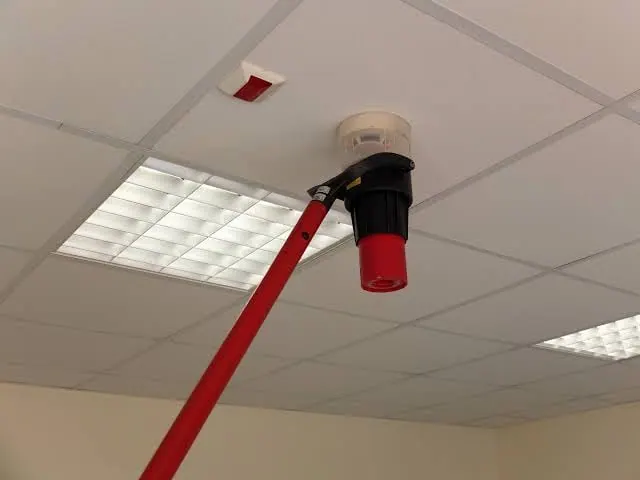
| Six-monthly | Inspection and test of detectors, manual call points, batteries, chargers and connections, including aspirating detection filters and airflow. Defects identified, recorded and quoted for rectification. |
| Annual | Full-system testing including fault simulations, evacuation tones and EWIS operation, battery capacity testing, and verification of every interface to sprinklers, dampers, lifts, air handling and monitoring. |
| Five-yearly | Comprehensive inspection and verification of the complete detection and warning system, detector performance confirmed, and end-of-life components identified and programmed for planned replacement. |

A system offline, a zone isolated or a panel in persistent fault is not a maintenance item, it is a live exposure sitting with the building owner. Safe QLD is on call 24 hours a day with a 2 hour response from the Gold Coast to the Sunshine Coast, and our QBCC licensed technicians attend equipped to diagnose the fault and get the system back to normal.
Repeat false alarms cost money, erode occupant response and eventually get ignored, which is the real danger. We treat them as a fault to be engineered out, not a fee to be charged again next month.
Brief reviewed with the fire engineer, consultant and certifier. Detection strategy, coverage, zoning and cause-and-effect developed to AS 1670.1, then drafted as shop drawings and schedules.
Our own specialist electrical contractors run the field wiring, devices, panels and interfaces to the construction programme, then program the panel logic and zone text to the approved matrix.
Device by device verification, every interface proven, evacuation sequences demonstrated and witness tested, with the handover package and as-built documentation issued.
The system rolls into an AS 1851 Section 6 contract with defect management, false alarm reduction, upgrade planning and 24/7 fault response for the life of the asset.
Pumped or un-pumped, Safe QLD has the equipment and expertise to install, service and maintain sprinkler systems, hydrants, hose reels and water tanks, with a fleet of service and installation technicians.
Explore water-based systemsSix in house disciplines covering design and engineering, drafting, project management and QA, specialist installation, commissioning and maintenance for new builds, upgrades and fitouts.
Explore major worksWhat building owners, facility managers and body corporates are responsible for under AS 1851-2012, and how a single maintenance contract keeps an entire portfolio audit-ready.
Understand your obligationsFast response across South East Queensland. Clear digital reports. Audit-ready compliance.